 Communication is the foundation of any successful business, including communication among systems and processes. When information is scattered across spreadsheets, emails, and disconnected tools that don’t talk to each other, mistakes happen.
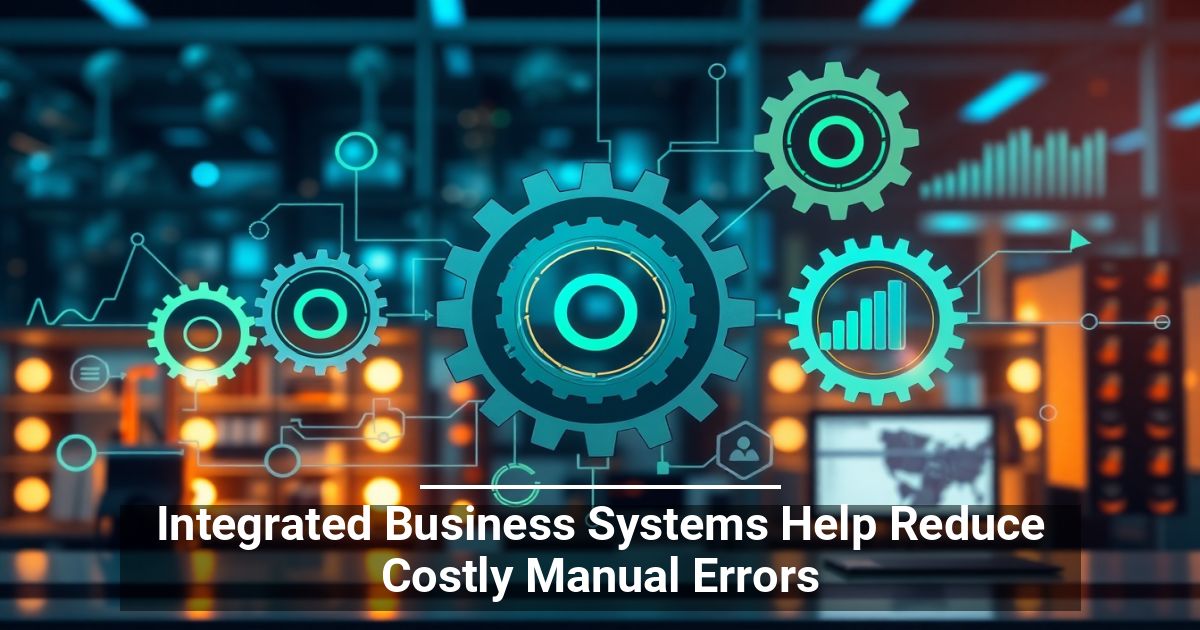
Integrated business systems exist to solve exactly that problem. By pulling data from every corner of an operation into a centralized platform, these systems reduce manual work that leads to costly, time-consuming errors while improving day-to-day operations.
When Systems Don’t Talk, Errors Multiply Fast
How many tools does your company use every day? Are there different tools for scheduling, inventory, CRM, and accounting? More importantly, do those systems communicate with each other, or do they require re-entering information from one system to another?
When business systems don’t communicate with each other, they create gaps that lead to duplicate work, inconsistent records, and frequent manual data entry errors.
An integrated business system supports centralized data management, meaning everything updates within a single platform. This eliminates the need to transfer information manually between systems, which, over time, can lead to real financial losses linked to data entry errors. Fewer touchpoints mean fewer opportunities for mistakes, which directly improves operational efficiency.
This doesn’t mean replacing people; it means redirecting them. When staff aren’t buried in manual data entry, they can focus on the creative, strategic work that requires judgment and experience.
What Happens When Your Systems Work Together
When sales, inventory, finance, and operations all feed into a single integrated business system, the difference is immediate. Real-time data synchronization and process automation mean that the moment an order is placed, inventory levels automatically update, invoicing is triggered, and the right people are notified without anyone having to touch a keyboard to make it happen.
Rather than maintaining separate records across multiple platforms, an ERP maintains a single version of the truth. Everyone from the warehouse team to the accounting department can work from the same current information.
Cleaner Data Leads to Smarter Decisions
Accurate data is the foundation of smart business decisions. With centralized data management in place, leaders can trust the information they are using to plan budgets, forecast demand, or evaluate performance. It supports faster trend spotting so that you can take advantage of opportunities sooner.
Better data also means faster insights. Instead of waiting for manual report preparation, businesses can access real-time dashboards that reflect current conditions. This level of visibility supports quicker, more confident decision-making.
Integrated Business Systems Are a Smarter Way To Run a Business
Operational efficiency doesn’t improve on its own, and fragmented systems tend to get messier as your business grows.
The right integrated business systems solution for your company depends on the company's size, industry, and existing tools. Many ERP platforms are designed to be modular, so you can start with the areas that need the most attention and create a more reliable and efficient workflow from there.