Technology decisions are easier when they’re part of a plan instead of a reaction to the latest problem.
For an Accounting & Tax firm, that plan needs to account for more than computers and software. It should consider where the firm is headed, how employees work, the information clients trust you to protect, cybersecurity risks, aging technology, upcoming expenses, and when changes can realistically be made without disrupting tax season.
The result doesn’t need to be a complicated five-year technology blueprint. A useful plan gives firm leadership a clear understanding of where you are today, where you want to go, and what should happen next.
Start With Your Firm’s Goals
Technology planning should begin with the business, not the technology.
Your firm may be planning to grow, add a partner, hire employees, expand services, move offices, support more remote work, improve client experiences, or simply make things easier for the team you already have. Each of those priorities can influence future technology decisions.
The conversation should also include what’s getting in the way today. Recurring frustrations, slow processes, unreliable systems, or workarounds employees have simply learned to live with can reveal opportunities for meaningful improvement.
Understand Where Your Technology Stands Today
Once you understand where the business is going, take an honest look at the environment supporting it.
That should include areas such as:
- Computers and their expected replacement dates
- Servers and network infrastructure
- Internet connectivity and remote access
- Microsoft 365
- Tax, accounting, payroll, and document management applications
- Backup and recovery
- Cybersecurity safeguards
- Vendor and software dependencies
- Technology issues affecting employee productivity
You don’t need to replace everything that is old or imperfect. The purpose is to understand what you have so upcoming needs don’t continually become surprises.
Understand Your Cybersecurity Risk
Cybersecurity should be part of the same planning conversation rather than something considered separately only when a new threat appears.
Accounting & Tax firms handle significant amounts of sensitive client and financial information. Your plan should consider how that information is protected through safeguards such as identity and authentication, email security, endpoint protection, security monitoring, employee awareness, vulnerability management, and backup and recovery.
Your Written Information Security Plan (WISP) can also help connect these safeguards to the firm’s broader responsibilities for protecting information.
The objective isn’t to eliminate every possible risk. It’s to understand the risks that matter to your firm and make informed decisions about how they should be addressed.
Decide What Matters Most
Most firms will find more opportunities for improvement than they can reasonably address at one time. That’s normal.
A useful technology plan separates those opportunities into priorities. Something creating a significant security or business risk may deserve immediate attention, while an improvement with less impact may reasonably wait until the next budget cycle.
A practical way to think about priorities is:
- What needs attention now?
- What should happen before the next busy tax season?
- What should be budgeted for during the next year?
- What can reasonably wait?
- What should continue to be monitored?
This creates a manageable path forward instead of a long list of recommendations that all appear equally urgent.
Plan Around the Busy Tax Season
Timing matters for Accounting & Tax firms.
Replacing a server, changing IT providers, deploying computers, making significant network changes, or introducing a new business system may be worthwhile, but January through April usually isn’t the ideal time to undertake unnecessary disruption.
That makes the rest of the year especially valuable for planning and improvement. Identify what should change, establish the budget, schedule the work, and give employees time to adjust before workloads increase again.
Security issues or critical failures may not give you the luxury of waiting, but planned improvements usually do.
Connect the Plan to Your Budget
A technology plan without a financial component isn’t much of a plan.
Computer replacements, infrastructure, software subscriptions, cybersecurity improvements, and larger projects should be identified early enough that leadership can anticipate them. Some expenses can be forecast several years in advance, while others will require estimates and adjustments as circumstances change.
The goal isn’t perfect prediction. It’s giving the firm enough visibility to make better decisions and reduce unexpected technology expenses.
Review the Plan Throughout the Year
Your technology plan should evolve with the business. A new employee, software change, cybersecurity concern, acquisition, office move, or unexpected equipment problem can change priorities.
At MicroNet, we use Technology Business Reviews (TBRs) to keep that conversation going. For Accounting & Tax firms, TBRs are typically scheduled during mid-Q2, Q3, and Q4, rather than interrupting owners and employees during the busy Q1 tax season.
These aren’t meetings simply to review support tickets. They’re conversations about the business, upcoming needs, technology health, cybersecurity, budgets, priorities, and what should happen next.
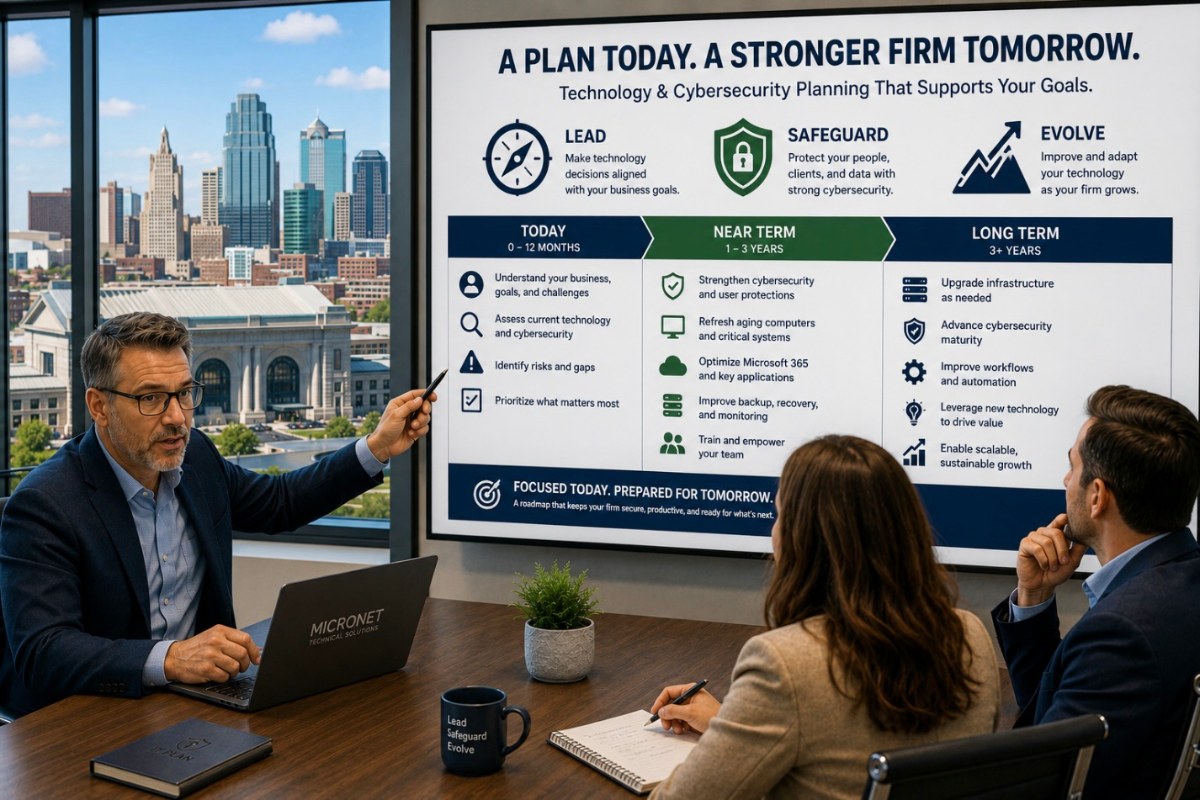
Lead, Safeguard, and Evolve
A long-term technology plan ultimately comes down to three things.
Lead by making technology decisions based on where your business is going.
Safeguard your clients, employees, information, and business with cybersecurity appropriate to your risks and responsibilities.
Evolve your technology and cybersecurity over time as the business, technology, and risks change.
You don’t need to accomplish everything at once. Consistent, informed improvement is more valuable than waiting for the perfect time to create the perfect technology environment.
Want a Second Opinion on Your Technology and Cybersecurity Plan?
If you’re unsure whether your current technology plan is taking your firm where it needs to go, MicroNet can provide a second opinion. We’ll start by understanding your business, review where your technology and cybersecurity stand today, and help identify the priorities worth considering next.
Even if you’re happy with your current IT provider, a second opinion can give you another perspective on whether your current plan supports your firm’s goals, protects what matters, and prepares you for what’s ahead.